
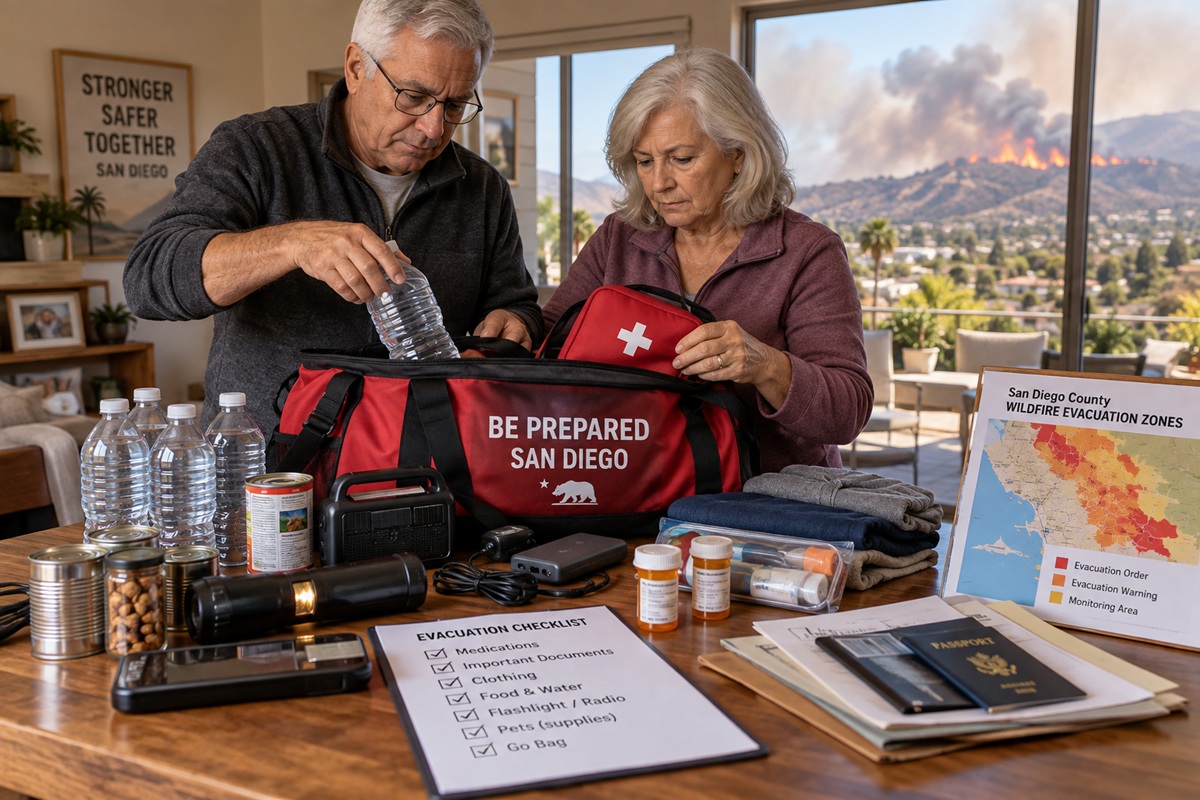
Nature knows no bounds. Natural disasters can occur at any time. They can’t be predicted, but planning can help safeguard one’s well-being. Wildfires are among the most common natural disasters San Diego families face. A public safety power shutoff plan designed to restrict the spread of these fires can become its own kind of emergency if it lasts for multiple days.
Like everyone, older adults face certain risks, but they may face more challenges because of medical or physical limitations. Evacuating someone with dementia poses unique challenges, as they may face severe physical and psychological risks, including heightened confusion from smoke, extreme danger during evacuation, and worsened cognitive symptoms due to stress and toxic air.
While no plan guarantees safety, households can still take steps to protect their family, especially aging parents. Registering cell phones on Alert San Diego and Accessible Notification, keeping a go bag handy, planning a backup power source, and taking the necessary evacuation steps are some of the best safety and preventive measures a family can take.
But these alone never guarantee overall well-being for older adults, who are most vulnerable during these kinds of disasters. To help families plan emergency preparedness for seniors in California, we’re sharing comprehensive older adult disaster guidance. We will also show how a staffed campus in a senior living community creates a haven for seniors during times like these.
The Three Events County Families Plan For
Wildfire season isn’t the only time older adults face different risks. Power shutoffs and evacuation risks can force families to stay homebound or leave their homes. Here are details on how older adults and families in San Diego County can prepare for these three critical situations.
Wildfire Preparedness
Clear any brush and flammable vegetation at least 100 feet around the home, and use fire-resistant roofing, dual-pane windows, and enclosed eaves. Have the Genasys Protect App to track active fires and evacuation warnings.
Public Safety Power Shutoffs (PSPS)
If the older adult relies on power-driven medical equipment, get them enrolled in SDG&E’s Medical Baseline Program. Have a reliable backup generator or portable battery station. Know where nearby community resource centers are located that provide charging stations and air-conditioned relief during outages.
Evacuation Planning
For emergency planning, have a go-bag portable emergency kit ready with a two-week supply of essential medications, copies of vital docs, a battery-powered radio, and bottled water. Plan accessible transportation routes and set up a buddy system with neighbors to confirm safety status immediately if an emergency strikes.
Building The Kit
Building an emergency kit involves preparing both a portable evacuation go-kit and a stay-at-home shelter kit with at least 72 hours of supplies. Planning now will save you from scrambling during an emergency. Starting preparation after you receive a red flag warning will leave you with little time to plan and ensure your loved one’s safety.
Here’s what should be included in your essential emergency kit:
- Water: Store one gallon of water per person per day. Aim for a 3-day supply for evacuation and a 2-week supply at home.
- Food: Pack a three-day supply of easy-to-open, non-perishable items like protein bars, crackers, and canned goods, plus a manual can opener.
Medication And Devices
Building an emergency medication and medical device kit for older adults requires planning for at least a 72-hour to two-week supply of essentials. You also need backup power and clear documentation.
Medications
- Pack a 30-day supply of vital prescription medications, or at least a two-week supply, in your go-bag.
- Note which medications need cold storage to then arrange a small cooler with ice packs.
- Keep an up-to-date printed list of exact drug names, dosages, frequencies, and prescribing doctors.
Medical Devices And Supplies
- Store extra eyeglasses, hearing aid batteries, canes, or walkers where you can grab them instantly.
- Secure battery backups or manual alternatives for power-based gear like oxygen concentrators or nebulizers.
- Write down device serial numbers, model types, and medical vendor contact details.
Documents
Organizing vital documents is a critical step for seniors preparing an emergency go-bag or shelter-in-place kit. Store physical copies in a waterproof container, and keep digital backups on a phone or in the cloud.
Here are the essential documents to include:
- Personal identification, including driver’s license, state ID, passport, and copies of Medicare, Medicaid, and supplemental insurance cards.
- Medical information, including an up-to-date printed list of current prescription medications, dosages, medical conditions, allergies, and the contact information for your doctors and preferred pharmacies.
- Legal and financial papers, including copies of wills, powers of attorney, advance directives, bank account information, and insurance policies (home, auto, and life).
- Important contacts in a physical, written list of family members, neighbors, designated caregivers, out-of-town emergency contacts, and local utility or agency numbers.
- Cash and cards, including small bills and credit or ATM cards, as digital payment systems may be offline during a power outage or disaster.
Comfort Items
Comfort items and familiarity reduce stress and support mental well-being for older adults during a crisis.
Here are the essential comfort items older adults must keep with them:
- Favorite non-perishable and comfort foods that fit prescribed dietary needs.
- Comfortable clothing, including soft, warm layers, an extra pair of well-fitting shoes, non-slip socks, and a cozy blanket.
- Personal care items like familiar scented lotion, lip balm, moist towelettes, and favorite hygiene products that will maintain a sense of routine.
- Sentimental or soothing objects like a photo album, books, large-print puzzle books, or an audio player with headphones and extra batteries.
Power Shutoffs And Equipment Dependency
Older adults who depend on power-dependent medical equipment should plan for an emergency before a Public Safety Power Shutoff (PSPS) occurs. Planning is critical for seniors who use oxygen concentrators, dialysis machines, or power wheelchairs, as utility companies like San Diego Gas & Electric (SDG&E) may shut off power during high wildfire risk or severe weather to prevent fires.
Key steps to take:
- The senior must join SDG&E’s Medical Baseline Program for lower energy rates and advance notifications. They must also ask about the Access and Functional Needs (AFN) program for backup power options.
- Planning for equipment backup is advised, and the older adult should talk to their medical equipment provider about battery backups or portable generators. They can also plan to operate any generator safely outside their home.
- Seniors can establish a buddy system with neighbors or family members to confirm everyone is safe before, during, and after an outage.
Evacuating A Person Living With Dementia
Those with Alzheimer’s and other forms of dementia can face several adverse risks during a wildfire. The disaster can aggravate behavioral concerns and may make them more confused and distressed. Managing these challenges requires a tailored approach and an emergency plan that accounts for both disaster response and cognitive support.
Reducing Agitation
Seeing everything around them in disarray may increase confusion, anxiety, and agitation for a senior with dementia. The family must focus on balancing their immediate physical safety with intensive emotional management. It’s best to keep them away from loud family discussions and speak to them in a calm, slow voice. Instead of explaining the emergency to them, they must be told a different story, like “We are going for a safe drive together now.” During packing, pack all their familiar items, like a favored blanket, a cherished family photo album, a stuffed animal, or their favorite music player.
Identification And Wandering Risk
An emergency evacuation significantly increases the risk of disorientation and wandering in seniors with dementia. To safeguard their safety, enroll them in the “Take Me Home” Registry—a free, confidential photo-based registry. If the loved one wanders during the evacuation, the family can request an instant search by their physical description and photo. Moreover, the individual must wear a permanent, non-glare medical alert bracelet and carry a Dementia Medical Alert Wallet Card detailing their diagnosis and the family’s contact information in all jacket and pant pockets.
Alerts, Registries, And Who To Call
To stay alert and prepared, older adults in San Diego County should sign up for AlertSanDiego to receive emergency notices and save key contacts like 2-1-1 for local disaster resources.
Besides AlertSanDiego, seniors can use tools like Genasys Protect and the SD Emergency Mobile App to get details related to specific evacuation zones, active orders, road closures, disaster tools, and preparedness tips.
They can call 2-1-1 or 800-227-0997 to get non-emergency disaster info, evacuation details, registration help, access, and functional needs services.
How Senior Living Communities Protect Residents During Emergencies
Household emergency plans rely on individual self-reliance, whereas senior living readiness provides built-in 24-hour staff and much more.
Here’s a side-by-side comparison showing how senior living community support outperforms a standard household plan.
| Preparedness Dimension | Standard Household Emergency Plan | Senior Living Community Readiness |
| Primary Responsibility | Self-reliant individuals or family units managing their own home. | Community administrators, RCFE/skilled nursing operators, and care staff, |
| Communication Strategy | Registering personal cell phones with AlertSanDiego and monitoring local AM/FM radio. | Multifaceted mass notification systems (loudspeakers, text alerts, direct family updates). |
| Evacuation & Transport | Personal vehicle use or pre-arranged rides with neighbors, family, or local contacts. | Preplanned accessible transit, pre-planned facility relocation sites, and staff-led triage. |
| Medical & Power Continuity | Individual backup batteries, coolers for medication, and personal Vial of Life forms on the fridge. | Mandatory 72-hour self-sufficiency, backup generators, and maintained individual clinical care plans. |
| County Resource Integration | Utilizes regional Cool Zones, dialing 2-1-1, or using SDG&E Access and Functional Needs (AFN). | Regulatory alignment with County Office of Emergency Services (OES) and Aging & Independence Services (AIS) standards. |
FAQ
- What belongs in an older adult’s emergency kit?
The emergency kit should include standard disaster supplies alongside specialized health, medical, and mobility items to support at least 72 hours to 2 weeks during wildfires, power shutoffs, or evacuations.
2. How much medication should be on hand?
A senior should keep a two-week (14-day) supply of prescription and necessary over-the-counter medications on hand for emergencies.3. How do I evacuate someone with dementia safely?
To evacuate someone with dementia safely during a wildfire or power shutoff, act early before conditions worsen, stay calm and communicate, and keep a packed go-bag with essential medications and comfort items.4. How do I register for county alerts and accessible notification?
Register at alertsandiego.org using AlertSanDiego to add your cell phone, VoIP (internet) phone, or email address. You choose an accessible option to receive the emergency message in a tailored format.5. What are the signs of heat illness during a fire event?
Early signs of heat illness in older adults during a fire event include behavioral changes, physical weakness, gastrointestinal distress, and absence of heavy sweating.
Bayshire Torrey Pines—Senior Living That Supports Seniors’ Overall Well-Being
At Bayshire Torrey Pines, we understand how difficult late spring through fall can be for older adults with healthcare conditions. Wildfire season also brings another challenge: planned power shutoffs. Instead of being forced to act suddenly in an emergency, families and seniors should plan for both dangers, since they never know how severe the disaster could be.
This wildfire evacuation guide applies to both older adults living alone and families with a parent with cognitive impairments.
While they should take precautions and preventive measures, families can also choose a continuing care retirement community (CCRC) for their aging loved one. This saves them the hassle of double-checking every arrangement and praying for the best and instead offers peace of mind, knowing their loved one is safe and secure in a compassionate setting with peers.
To learn more, contact us at Bayshire Torrey Pines. Our community offers multiple care options, all on a single campus. With multiple care options available, your loved one can access the continuum of care needed to support whole-person well-being.
Schedule a tour today to learn more about the services we offer.
